
The plan hinged on two critical assumptions: India would not be able to replenish supplies quickly to launch a counter-attack. India could not respond in enough strength to dislodge the Pakistanis. Both assumptions would be proved wrong due to the ferocity of the Indian response, reveals former RAW officer Tilak Devasher in his new book, Pakistan At The Helm.

Abbasi will run the government until Sharif's brother Shehbaz is elected as member of parliament

A five-member JIT from Pakistan reached Pathankot on Sunday to carry out a probe into the attack at the IAF base at Pathankot.
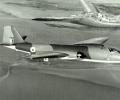
'If we had sent a few airplanes (into Tibet), we could have wiped the Chinese out.' 'And everything could have been different in the 1962 War.' 'They did not believe me there was no Chinese air force.' 'Can you imagine what would have happened if we had used the IAF at that time?' 'The Chinese would have never dared do anything down the line.'

'In her insecurity, she destroyed the institutions of democracy.' 'She packed Parliament with her supporters with loyalty being more important than ability; she superseded judges; she corrupted the civil service.' 'She knew how to use people against each other and was quite a master of that.' 'She would do this with calculated skill and in the bargain cause enmity between brothers, split up families.'

'This is basically aimed at vilifying Nehruvian ideals.' 'Why?' 'Because, Nehruvian leadership is seen by Hindutva forces as the one which did not let them have their Hindu Raj.' 'The Hindutva proponents have always assumed that had Sardar become the first prime minister, India could never have become a secular State,' says Mohammad Sajjad.

'General Sam Manekshaw looked from left to right and said, "Gentlemen, I have come to have a look at you. I am taking a good look at your faces. When I come back after the war is over, some faces may not be here".'
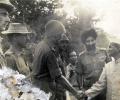
Lieutenant Colonel Desmond Hayde was awarded the Mahavir Chakra, the second highest honour in battle, for winning an epic battle in Pakistan. In a brilliant and gruesome assault, what he and his men achieved that September 50 years ago had never been seen before.

Any settlement with Pakistan won't last unless it comes with big power guarantees, says Shekhar Gupta.
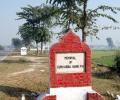
In super-human acts of valour, Havildar Abdul Hamid personally knocked out five tanks over two days, effectively derailing the enemy offensive in the 1965 Indo-Pak War. 'Decades later, I realised not only how much the nation owed to this great son of India but also that my entire family was probably alive thanks to him,' says Vijay Dandapani.
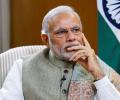
Like Nehru, Modi is loathe to touch the public sector. His policy towards Israel leans towards 'non-alignment'. You can find other similarities: frequent public speeches, personalised leadership, total control over foreign and strategic policies, even stylised dressing, says Shekhar Gupta.

Pundits in Pakistan and also some western diplomats are predicting that the next army chief will be forced, partly by institutional pressure and partly by circumstances, to indulge in some tough talking with the civilian leadership. How the civil-military equation settles in this sort of a situation is something that will determine the future of Pakistani politics, and also Pakistan's relations with rest of the world, says Sushant Sareen.
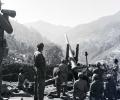
Fifty years ago, India and Pakistan fought a short but bloody war. The author finds out how Sainik Samachar, the defence ministry's journal, reported it.

'Pakistan's recent utterances and tendency to use pinpricks to try our patience appear reminiscent of 1965. We are a strong nation, emerging stronger,' says Lieutenant General Syed Ata Hasnain (retd).

'In our film industry, there are not many opportunities for actors... Our films are not character based, they are hero and heroine based. The only roles we have for character actors are to play the girl's or boy's dad or a police officer...'

Aseem Chhabra tell us how he watched 302 films in 365 days on airplanes, on Netflix, Amazon, iTunes, Google, Hulu, DVDs and even on YouTube.

'Diplomatic engagement will continue even as India keeps all its options open with respect to discretely targeting the Pakistani military and its terrorist proxies.'

'Nawaz Sharif knows a coup in 2016-2017 will not only complete Pakistan's isolation, but even a whiff of instability will frighten the world into imagining another Islamic State-zone, and this in a fully nuclearised subcontinent,' says Shekhar Gupta.

Incidents of arson, firing and vandalism were reported from Madhya Pradesh, Rajasthan, Uttar Pradesh, Bihar and Punjab as protesters agitated against the dilution of the SC/ST Act.

The suspected Jaish-e-Mohammed terrorists dressed in army uniforms launched the attack with an aim of destroying the air base.
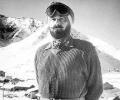
Lieutenant General Harbakhsh Singh, GOC, Western Command, disobeyed the then army chief and took on a superior Pakistani armoured column. The Indian Centurion tanks outgunned the more modern Pakistani Patton tanks in the battle at Khem Karan, that proved the turning point of the 1965 War. Brigadier Gurmeet Kanwal (retd) salutes the Soldiers' General.

'Small bands of terrorists believe they can destabilise superpowers if they are ready to become martyrs.' 'Since the road to paradise is under the shade of swords, it is a win-win situation for those ready to die for the cause of Allah.'

'I don't want a government to tell me that I can't be there for my sister's wedding.'

'He was believed to finish his own work in an hour and spend the remainder of the time walking from one office to another, sitting down with the harried junior staff and helping them sort out the problems they were working on.'
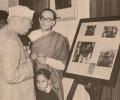
'The evidence about a plane crash that killed Netaji as stated in the Shahnawaz Committee report, is quite strong.' 'None of the files that I read bear any evidence that it was Nehru who ordered this kind of intrusive surveillance.' 'The government's excuse that declassifying some files may affect India's relations with friendly foreign countries is not a credible one.' Subhas Chandra Bose's grand-nephew and Trinamool Congress MP Sugata Bose on reports that his family was under surveillance for 20 years and the rumours over Nataji's death.

Global working conditions have worsened in 2014.

Three Indian Air Force officers captured as Prisoners of War by Pakistan during the '71 War made a daring escape from a Rawalpindi jail. M P Anil Kumar recounts that heroic story.

'In her insecurity, she destroyed the institutions of democracy,' says Khushwant Singh.

A sensational interview on India-China ties, with the man most qualified to answer.
